Showing posts with label nutrition. Show all posts

Thursday, 10 May 2012

Bodybuilding Diet

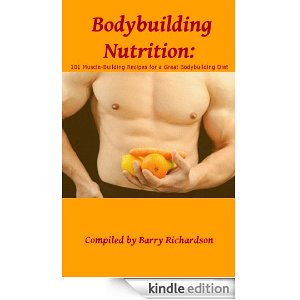
I was privileged to be asked to take a look at a new book on bodybuilding diet by Barry Richardson this week. Conveniently, it's out in Kindle format and has a fully navigable table of contents. There's no nonsense, no technical information to wade through, just easily accessible, simple to prepare recipes for those of you who like to build muscle without sacrificing taste.

Amazon link


Friday, 7 August 2009

Vegetarian Training Diet

Statstically, vegetarians have a higher body fat percentage than meat eaters. They either tend to be corpulent or "skinny fat". I was vegetarian for 25 years but spent the last year eating chicken and fish to see if it made any difference. It certainly made muscle gain and fat loss easier but I concluded it wa snot essential. I'm back to my veggie ways, and happy with it.

The big problem with vegetarian diets is that they tend to compensate for protein with increased amounts of carbohydrate. If you eat too many starchy carbs (most nutritionists recommend 60% of calories come from carbs!) they will be stored as fat. They also increase the incidence of type II diabetes, mood swings, energy fluctuations etc.

Rather than loading up on pasta, bread and rice, vegetarians are better off increasing their intake of essential fats (omega 3 and 6) and finding high quality proteins.

An essential fat blend (such as Udo's Choice oil or capsules) is perhaps the easiest way to meet your EFA requirements. It's also a good idea to stock up on flaxseeds and almondss (although nuts and seeds generally are a good investment). Obviously portion size is important as nuts are calorie dense.

Protein should come from eggs and whey protein chiefly (isolate rather than concentrate. Ion exchanged is the best source). You can also use prepared egg-white mixes or egg protein powders.

Quorn and soya products are also a useful form of protein. For carb-load days you can combine beans and rice to make complete proteins too.

Below is a sample (strict) fat loss, muscle building diet for vegetarians:


Breakfast: ½ cup berries, 1.5x scoops of whey, 1 tea spn Udo’s Choice, 15 almonds, water

Mid AM snack: 1 x whey, 1tspn Udo’s or 5 almonds

Lunch: 2 x wholemeal Nimble bread, or 1 slice of bread, or half a cup of wholegrain rice, or 1 sweet potatot
a) 250 cals veg protein (qourn or soya)
b) cottage cheese or
c) 2 eggs

5 almonds or 1 dessert spn seeds

Mid PM snack: 1 x whey, 1 tspn Udo’s/ 5 almonds

Dinner:
A) 250 cals veggie protein, B) cottage cheese, C) 2 eggs
salad/veg, 1 dspn of Udo’s

Evening snack: 1 x Casein
5 almonds or 1 tspn Udo’s


You should supplement with a good multi vitamin/mineral.

(Post workout: A) 2 x Pro Recover, 5g Creatine
Or B) 2 rice cakes, jam, 1x whey)

Every third day have a carb-load meal (an extra sweet potato, half cup of rice, slice of wholemeal bread and maybe add a banana to breakfast).

Consistency is the key - with both training and diet. Don't do anything excessive...just keep following th eplan, week in, week out, and the results will come.

If you are socialising, one meal per week could be a cheat meal....eat anything you like for an hour (but don't go crazy and gorge yourself!) This could be an opportunity to go to an Italian restaurant or whatever you fancy (just order anything from the main course and sterr clear of the bread and desserts).

Keep alcohol to an absolute minimum (save it for your cheat meal ideally).
Tuesday, 6 March 2007

Are You Serious About Changing Your Body?


At F.I.S.H. we take great pride in our knowledge and experience of using weight training to change body composition. Whether your goal is to lose body fat or increase muscle mass we can help you with all aspects of training and nutrition. We always start with technique, ensuring that all exercises are safe and effective. We then make progressive demands on the tensile strength of muscle fibres and on the respective energy sustems to elicit the desired training effect. Through manipulation of training variables, nutrition and rest we can help you to make the most of growth hormone production to build lean muscle and eliminate body fat.


If you think you have the dedication to transform your body, and if you can commit to three or more training sessions per week then we would like to hear from you. To kick start the opening of the new studio we are looking for four people willing to undertake the body composition challenge and share their progress with visitors to our blog. The four people selected will receive a substantial discount on Personal Training sessions for the period of the challenge (12 weeks).


Please email fishfitness@tiscali.co.uk for further details.

F.I.S.H. Goes Limited


F.I.S.H. has now started the process of becoming a limited company - Fitness Instruction for Strength & Health Limited. Presently we are operating as sole traders, Priority Principle and Inspire Fitness. Once the limited company is operating we will be approaching other Personal Trainers about using the studio.

The cable crossover is now assembled and the studio is now fully functioning. We have ordered a preacher curl bench and dip bars and are awaiting the delivery of safety pins for the power rack.

Training in the studio is proving to be sheer luxury. It's nice to be able to perform supersets, tri-sets and even giant sets without losing the equipment mid-way. Derek and Chutney have been meticulously recording loading, tempo and time under tension and thus progressing at each and every workout. We have two more weeks of mixed strength and hypertrophy to go before moving on to Poliquin's German Body Comp Program for six weeks prior to a maximum strength phase.

Melody has started a three day split and is already starting to rediscover the definition she had before Christmas. Nutrition is improving all the time and the new trade account with Tropicana is proving very popular - particularly as there is no minimum order (Maximuscle insisted on at least £300 per order). The combination of EFA capsules and CLA is proving effective and we have both started on Hydroxycut Hardcore, the new version of the fat stripper we both employed whilst in Australia a few years ago.

Best achievement so far must go to Jon Martin who is now doing parallel squats with a three second eccentric and explosive concentric phase. We have been working on form for a few weeks and it is now close to perfect. He's currently up to 47.5kg but will rapidly increase the load now that the range of motion and technique have developed.

Monday, 15 January 2007

Fat Loss Tips


Whilst it is a good idea to estimate your resting metabolic rate and then to make adjustments for activity and weight loss/gain goals it is possible to make good progress even if you don't go through with the calculations.

In the past I have calculated my clients' nutritional needs down to the last gram of each macronutrient. I've then produced detailed meal plans that ensure a balanced array of nutrients, timed with military precision. I used to present the client with the plan confident that they would follow it to the letter and make the gains they wanted.

Bitter experience has taught me that there are very few "ordinary" trainees who are going to be consistent with such plans. Their lives are too varied; the dietary rules are too strict and it is only a matter of time before they break them. Usually these infringements of the rules incur a "oh, well, might as well give up" response and the goal gets ever more remote.

There are exceptions, of course, and these people make the best gains.

Others get into the idea of writing down what they eat - only they do this retrospectively and then beat themselves up for consuming too little or too much.

Recently I've elected for a basic ("ideal") meal plan with a number of alternatives for each meal and some general principles for those "can't be bothered" times.

Basically, there is a simple structure: eat six times a day at roughly three hourly intervals. At the simplest, divide your target calories (which you can determine by keeping a food diary for five days and seeing what you need to maintain, or you can do the calculations). If your goal is to lose fat, reduce this figure by about 15%.

Divide your calories by six and aim to eat roughly this amount at each of the six meal times.

For those who are busy, protein bars or drinks will provide convenient alternatives, along with hard fruit.

The diet should remain high in protein (1.6g per kilo of lean body weight is recommended for fat loss. There's no benefit from going above 2g per kilo). Carbohydrates should come from wholegrain sources wherever possible and should be low GI, and fats should be principally monounsaturated and polyunsaturated.

Once you decide on the sorts of foods you are going to eat, spend a bit of time calculating their macronutrient and caloric values by referring to the packet labels and using a calculator. It should then be possible to identify a variety of foods and snacks that could make up a meal slot.

You can work out the percentages of protein, fat and carbohydrate in accordance with your goals. For health the ratios are: protein 10%, carbohydrate 60%, fat 30%. For serious training, the retention of lean tissue and fat loss these percentages will need to be adjusted (for example 20, 55, 25). You may want to experiment with ratios or refer to a good nutrition book.

For simplicity, divide the values between the six meals (remember, there's little point consuming more than 25-30g of protein at one time - the excess will be excreted or stored as fat); and don't get hung up on carbohydrates: you need them! Your brain needs them, and your muscles needs them. Just make sure that they are from clean, fibrous sources and low GI, except within the fifteen minutes immediately after training when simple sugars help to speed recovery and optimise protein synthesis.

A sample basic structure might look like this:

7am Shreddies, skimmed/semi-skimmed milk; glass of orange juice

10am Protein bar; apple

1pm Tuna salad sandwich (wholemeal bread - preferably with seeds)

4pm Protein bar; pear

7pm Sweet Potato, Chicken breast/grilled fish/broccoli, carrots

10 pm Protein shake; handful of nuts

Post workout (within 15 minutes) 1-2 bananas; protein shake


That's about as basic as it gets. Once you have your structure in place you can add variety by substituting foods of similar nutritional value. Make sure there are enough good fats by adding cold pressed extra virgin olive oil to salads, eating a handful of nuts or seeds, and eating salmon once a week. The protein bars and shakes should be the low GI/low-moderate carbohydrate variety if your goal is to lose fat.

The more planning and calculating you do, the better the results, but as I said at the beginning, there are few people who can commit to that. Find out the sort of foods you should be eating; approximate their caloric value, and slot them into the six meals a day structure.

If you can't afford, or don't want, protein supplements, eat more fish, chicken /turkey breast, eggs, low fat yoghurts etc. You might also want to look at quinoa.

Once you know what you should be eating you can stock up on all the required foods and snacks and prepare food in advance for convenience/packed lunches.

One last thing: if you do "fall off your horse" and binge/eat too much when dining out, don't fret. Enjoy yourself and then resume your normal eating structure. Don't skip a meal or try to adjust for the additional calories. The basic meal plan should be the norm but there will (and must be) exceptions (unless you are a competitive figure/bodybuilding athlete or have a pathological relationship with food and body image).

Foundations for a Better Physique now on Kindle! Get your Kindle here.